Winter Sailfish Fishing Florida Hotspots: The 2026 Peak Season Guide
- Deep Sea Fishing
-
Dec 21
-
6 min read
- Share post
Winter Sailfish Fishing Florida Hotspots: The 2026 Peak Season Guide
When the first legitimate cold fronts of the 2025-2026 winter season sweep across the Florida peninsula, most people reach for a sweater. Florida’s offshore anglers, however, reach for their kite rods.
Winter in Florida isn’t just a break from the humidity—it is the arrival of the Atlantic Sailfish migration. These acrobatic, indigo-colored billfish follow the cooler water and massive bait schools south, creating some of the most consistent and exciting sportfishing on the planet. For 2026, the migration is expected to be as vibrant as ever, with the “Sailfish Alley” stretch and the Florida Keys serving as the primary battlegrounds.
If you’re planning to hunt for the world’s fastest fish this winter, here is the definitive guide to the hotspots, the gear, and the timing you need for a successful 2026 season.
The 2026 Sailfish Migration: Why Winter?
Unlike many species that retreat when temperatures drop, the Atlantic Sailfish thrives in the transition. They are pelagic wanderers that ride the Gulf Stream—a massive, warm-water current that flows north along Florida’s east coast.
In the winter, northern cold fronts push southward, chilling the nearshore waters. The sailfish congregate where the warm Gulf Stream meets the cooler coastal water, often right on the “color change” or “edge.” They aren’t just here for the weather; they are following the ballyhoo, sardines, and goggle-eyes that are forced out of the estuaries by the cold.
Top Hotspots for Winter 2026
1. Stuart: The Sailfish Capital of the World
Stuart is the northern gateway to “Sailfish Alley.” The geographic setup here is unique because the continental shelf is remarkably close to the St. Lucie Inlet. Within 20 to 30 minutes of leaving the dock, you can be in 100+ feet of water where the sails are parading south.
- Best Window: December 2025 through February 2026.
- What to Expect: Stuart is famous for “dredge fishing.” Instead of kites, many captains here pull large bait arrays (dredges) to mimic a school of fish, then “pitch bait” to a sailfish once it enters the spread.
- Internal Link: Book a Stuart Sailfish Charter
2. The Palm Beaches (Jupiter to Lake Worth)
This is arguably the most consistent sailfish hotspot in the world. The Gulf Stream swings within a few miles of the beach here, concentrating the fish into a narrow “highway.”
- Peak 2026 Events: * Silver Sailfish Derby: January 7, 2026
- Operation Sailfish: January 14, 2026
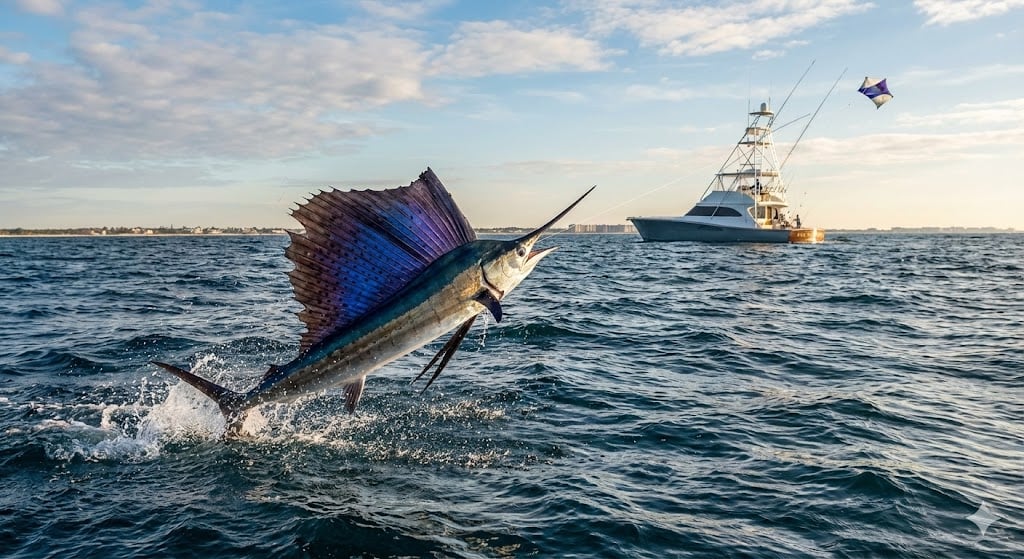
- The Technique: This is the heart of Kite Fishing. On a windy winter day, you will see hundreds of colorful kites flying over the water. It is a highly visual and effective way to present a live bait right at the surface without any visible line.
3. Fort Lauderdale & Pompano Beach
Fort Lauderdale offers some of the most accessible sailfishing in Florida. Because the reefs are so close to shore, you can often find sailfish in as little as 60 to 100 feet of water.
- 2026 Tournament Alert: The Sailfish Challenge (Feb 18–22, 2026) is a massive event where the top pro teams compete for six-figure purses.
- The Vibe: Great for those who want a shorter run to the fishing grounds. You can literally see the high-rise condos while fighting a trophy billfish.
4. Islamorada & The Upper Keys
Islamorada is where the “run and gun” style of sailfishing was perfected. Here, captains often look for “showering ballyhoo”—schools of baitfish leaping out of the water as sailfish hunt them from below.
- Strategy: Sight-fishing. Unlike the kite fishing of Palm Beach, Islamorada guides often hunt for the fish visually, casting live baits directly to fish they see on the surface.
- Internal Link: Top-Rated Islamorada Billfish Guides
5. Key West: The Final Surge
By late winter (March and April 2026), the bulk of the migration has reached the southern tip of the Keys. Key West offers a unique opportunity because the fish can be found on both the Atlantic side and the Gulf side near the wrecks.
- Target Species: You’ll often find Blackfin Tuna and Kingfish mixed in with the sailfish here, providing a “meat fish” bonus to your billfish quest.
Essential Gear & Techniques for 2026
The Art of Kite Fishing
If you haven’t experienced kite fishing, it’s the gold standard for Florida sailfishing. A specialized square kite is flown from the boat, and your fishing lines are attached to it via “release clips.” This keeps the bait (usually a live Goggle-Eye or Threadfin) struggling at the surface.
- The Benefit: There is no leader or line in the water to spook the fish. When the sailfish strikes, the line pops out of the clip, and you are direct to the fish.
Light Tackle is Key
Sailfish are not massive giants like Blue Marlin; they typically weigh between 40 and 80 pounds.
- Rod/Reel: 20lb class conventional or heavy spinning gear.
- Leader: 30ft of 30-40lb fluorocarbon.
- Hooks: Circle hooks are mandatory in 2026 for billfish tournaments and highly recommended for all anglers to ensure a healthy release.
3 Tips for a 2026 Winter Victory
- Watch the Weather: The best sailfishing happens on the days most people stay home. A “North Wind” is your best friend—it blows against the Gulf Stream current, creating the “standing waves” that sailfish love to surf.
- Look for the “Edge”: If you see a sharp line where green water meets deep indigo blue, stay there. That is the Gulf Stream boundary where the bait is stacked.
- Stay “In the Dark”: Many of the best bites happen at first light or during the “change of tide.” Be the first boat out of the inlet in the morning.
Conservation and the “Silver Flag”
The Atlantic Sailfish is Florida’s official state salt water fish, and conservation is taken seriously. In 2026, virtually all sailfish are caught and released.
- The Release: Never pull a sailfish over the gunwale for a photo. Keep the fish in the water, revive it by moving the boat slowly forward until the fish regains its color, and then let it go.
- The Trophy: If you want a mount, take a quick measurement and high-res photo. Modern marine taxidermists create “replica” mounts that look better and last longer than traditional skin mounts.
Conclusion: Book Your 2026 Adventure
The 2026 winter sailfish season is the “Super Bowl” of Florida offshore fishing. Whether you’re flying kites off Palm Beach or chasing showers in Islamorada, the thrill of seeing that purple sail break the surface is something you will never forget.
Don’t wait for the cold front to hit! The best captains in Florida are already booking their 2026 tournament and prime winter dates.

