The “Sailfish Alley” Phenomenon: Winter Kite Fishing in Stuart & West Palm Beach
Intro: The Winter Rush
When the first cold fronts of the year sweep across the Sunshine State, a specific stretch of the Atlantic coastline transforms into the most productive billfish corridor on the planet. Welcome to Sailfish Alley. Stretching from the waters of Fort Pierce down through Stuart and into the deep blue off West Palm Beach, this region becomes the winter home for the Atlantic Sailfish (Istiophorus albicans).
For the 2026 season, the bite has been nothing short of legendary. Whether you are a seasoned tournament pro or a first-timer looking to see your first “purple shadow” behind a bait, this guide breaks down why Stuart is the “Sailfish Capital of the World” and how you can get in on the action.
The Biology of the Bite
Sailfish are highly migratory. As water temperatures in the North Atlantic drop below 70*F, these “pavement-burners” of the sea head south. They follow the Gulf Stream’s warm edges, pushing schools of ballyhoo and goggle-eyes against the reef lines.
Pro Tip: Look for the “color change.” The intersection where the emerald green coastal water meets the deep cobalt blue of the Gulf Stream is where the food chain is most active.
Mastering the Kite: The Southern Florida Special
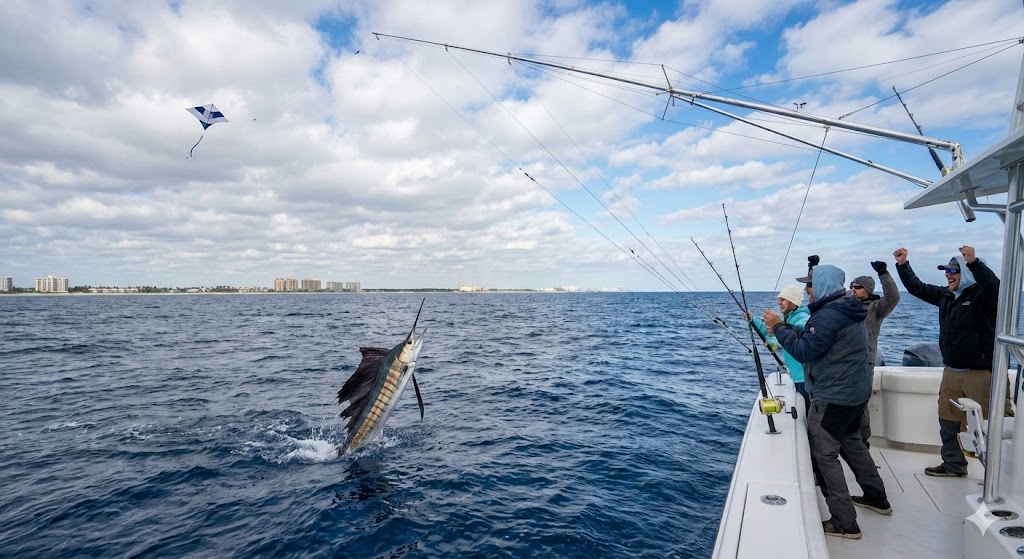
The primary method used by elite Florida fishing charters is Kite Fishing. This involves flying a specialized fishing kite behind the boat and using release clips to suspend live baits (usually goggle-eyes or threadfin herring) so they struggle right at the surface.
-
Zero Visibility: The kite keeps the leader out of the water, meaning the sailfish only sees a struggling baitfish—not the line.
-
The “Splashing” Effect: A baitfish struggling at the surface sends out vibrations that act like a dinner bell for predators.
-
The Hookset: In 2026, most charters have transitioned to Circle Hooks exclusively. When the sailfish takes the bait, the line “pops” from the kite clip. You don’t “jerk” the rod; you simply reel until the line comes tight, allowing the circle hook to find the corner of the fish’s jaw.
Where to Book: Stuart vs. West Palm
-
Stuart: Famous for the sheer volume of fish. It is not uncommon for a 4-hour charter to see “quads”—four sailfish hooked at once.
-
West Palm Beach: The drop-off is much closer to shore here. You can be in “the alley” within 15 minutes of leaving the inlet, making it perfect for half-day trips.
2026 Conservation Standards
Florida law requires that all billfish remain in the water for photos. Lifting a sailfish into the boat for a “trophy shot” is not only illegal but detrimental to the fish’s survival. Your charter captain will help you get a great “over the side” photo before a healthy release.

